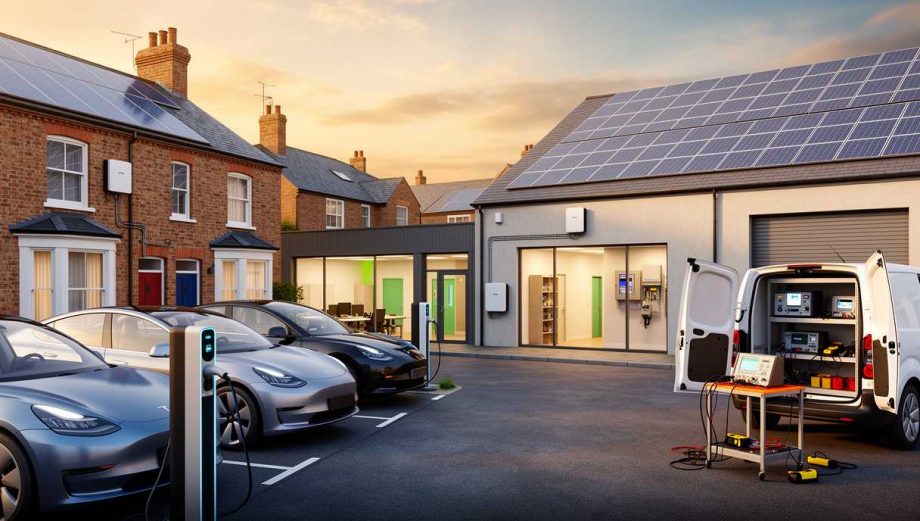
The way Bedford powers everyday life is changing fast. With rising electricity prices, growing adoption of solar PV and the push for low‑carbon heating and EV charging, battery storage is becoming the backbone of a resilient, efficient energy setup. For households in Brickhill and Biddenham, shops in the town centre, and industrial units on the outskirts, intelligent batteries turn intermittent energy into dependable power. Installed by qualified electricians who understand local properties and regulations, modern systems help you capture excess solar, ride out peak tariffs, and keep critical circuits running during outages—without compromising safety, compliance or performance across Bedford and the wider Bedfordshire area.
How Home and Business Battery Storage Works—and Why It Matters in Bedford
At its core, a solar battery stores electricity to use later when you need it more. During sunny hours, your PV array may generate more than you consume; instead of exporting it for a modest tariff, a battery holds that energy so you can run appliances in the evening. Even without solar, smart batteries can charge on off‑peak or agile tariffs and discharge during high‑cost periods—cutting bills and smoothing demand. This simple charge–discharge cycle makes a big difference in Bedford, where many homes are adopting EVs and heat pumps that push consumption into the evening peak.
Typical domestic systems range from 5–15 kWh of usable capacity, enough to cover cooking, lighting and media for several hours. For small businesses or schools in and around Kempston and Bromham, 20–100 kWh batteries paired with PV can reduce peak demand charges and improve power quality for sensitive equipment. Modern systems offer round‑trip efficiencies of 90–95%, integrated inverters to convert DC–AC seamlessly, and sophisticated controls that forecast solar production and learn your building’s usage pattern.
Backup capability is another driver for Bedfordshire villages that occasionally experience disruptions. With the right inverter and changeover arrangement, a battery can isolate from the grid and power a dedicated “critical loads” board—keeping lighting, Wi‑Fi, refrigeration and essential plugs operating. It is vital this is designed to the IET Code of Practice for Electrical Energy Storage Systems, with attention to earthing, fault protection and safe transfer switching. In practice, well‑designed backup preserves comfort and safety without oversizing the installation or risking non‑compliance.
When combined with EV charging, battery storage unlocks more self-consumption and price arbitrage. Charge the battery when solar is abundant or tariffs drop overnight, then top up the car or run the house when prices rise. In commercial settings, batteries shave peaks caused by machinery start‑ups or HVAC ramps, stabilising loads and lowering kVA‑based charges. Across homes, schools and light industrial sites, the result is the same: lower bills, higher resilience, and better use of local renewable generation—key benefits as Bedford’s energy landscape evolves.
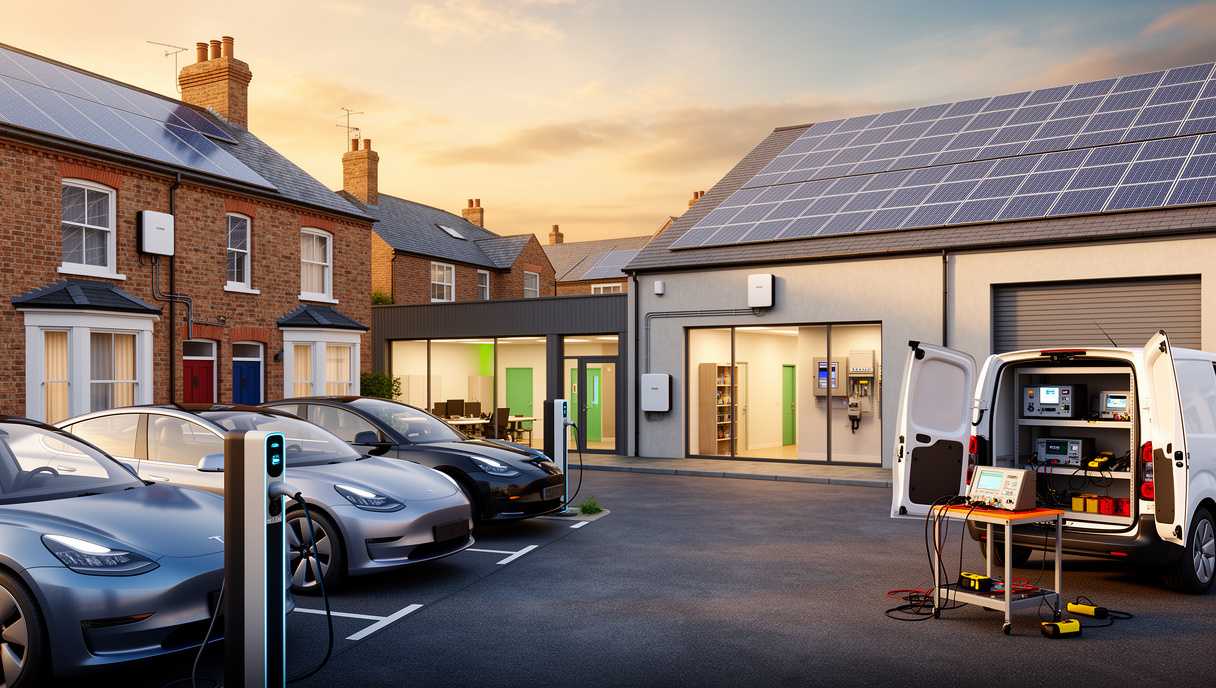
Choosing the Right System: Sizing, Safety, and Smart Controls
Right‑sizing starts with understanding your consumption profile. A quick look at yearly kWh is helpful, but the true value lies in half‑hourly patterns: when do you cook, wash, charge, or run production lines? In Bedford’s typical semi‑detached homes, 7–10 kWh batteries often balance cost and coverage; properties with larger PV, heat pumps or heavy evening usage may benefit from 12–20 kWh. Commercial premises with daytime loads (offices, schools, retail) can often match solar output to a medium battery to flatten peaks and capture surplus generation. A site survey will check spare boardways, main fuse size, earthing arrangement and any need for a consumer unit upgrade to accommodate the new equipment safely.
Compliance and safety are non‑negotiable. UK installations should be designed to BS 7671 (IET Wiring Regulations) and follow the IET Code of Practice for Electrical Energy Storage Systems. Depending on inverter capacity, your installer will notify or seek approval from your Distribution Network Operator under G98 or G99. Surge protection, appropriate RCD selection, correct cable sizing, labelling and clear isolation points are all essential. In multi‑occupancy or commercial premises, coordination with fire strategies and emergency lighting is vital. For many properties in Bedford where space is at a premium, wall‑mounted lithium iron phosphate (LFP) batteries are popular due to their strong thermal stability and long cycle life; siting in a garage, utility or plant room with adequate clearances is typically preferred over bedrooms or escape routes.
System architecture matters. AC‑coupled batteries retrofit neatly to existing PV, while hybrid inverters integrate new PV and storage in a single, efficient unit. If your property uses three‑phase supply—common on larger homes and business sites—ensure the solution supports balanced operation. Smart controls should integrate with time‑of‑use tariffs, forecast weather, and let you set priorities: solar self‑use first, cost saving, or backup reserve. Look for robust warranties (often 10 years), clear cycle life promises, and proven monitoring apps that make performance transparent. A pre‑installation electrical condition check (akin to an EICR) helps identify remedial work before commissioning, avoiding nuisance trips or poor performance. With a quality design and accredited workmanship, your system will meet today’s needs and remain adaptable as tariffs, grid services and building usage evolve.
Finally, plan for whole‑life value. Consider the cost of scaffolding (if pairing with new PV), cable runs, protective containment in commercial areas, and accessibility for maintenance. Think about future loads—an EV charger, an induction hob, or new HVAC—and size cabling and switchgear to avoid rework. A thoughtful design grounded in standards and real‑world usage will pay for itself in smoother operation, higher safety margins and stronger long‑term savings.
Local scenarios, tariffs and real‑world results in Bedfordshire
For a typical Bedford semi in Brickhill with a 4 kWp PV array, a 10 kWh LFP battery and a hybrid inverter, daytime solar covers base loads, while surplus fills the battery for evening use. On a variable tariff, the system can top up overnight at low rates during winter, then discharge during breakfast and evening peaks when prices rise. Many homes see 60–80% self‑consumption in spring and summer, meaning far less imported electricity and more predictable bills. If the inverter supports an emergency power supply, key circuits—lighting, fridge‑freezer, broadband, and a few sockets—continue during a grid outage. For households in villages like Bromham or Wootton, where flickers can disrupt work‑from‑home or refrigeration, that’s practical resilience without resorting to a generator.
Consider a small retail unit near Bedford town centre with a 15 kWp PV system and 30 kWh of storage. The store opens before solar ramps up but faces a late‑morning spike as HVAC and refrigeration kick in. With a battery, that spike is shaved, reducing demand charges and smoothing voltage for sensitive equipment. Midday excess fills the battery; late afternoon discharge trims the peak again. Over a year, the business reduces imports, stabilises operations and improves ESG reporting—valuable for landlords and tenants alike. Annual maintenance can include functional checks, firmware updates, visual inspection of terminations and verification that protection devices operate as intended.
In light industrial units around Elstow and Kempston, a 30–60 kWh battery paired with 30–50 kWp of PV can significantly cut red‑band distribution costs and provide ride‑through for short disturbances that would otherwise reset equipment. Schools and community centres also benefit: daytime PV powers classrooms; batteries handle assembly‑time and early‑evening events. Coordinated design ensures safe segregation, signage, lockable isolators, and clear O&M documentation for caretakers and facility managers.
Tariff‑aware control is where UK systems shine. On off‑peak windows, batteries charge at a low unit rate, then discharge during periods that often exceed twice that price—particularly in winter. With careful sizing, realistic round‑trip efficiency assumptions and seasonal strategies, homeowners and businesses across Bedford can achieve meaningful bill reductions and carbon savings. To explore accredited design, safe installation and ongoing support for Battery Storage in Bedford, look for experienced electrical contractors who integrate storage with consumer unit upgrades, EV chargers, solar PV and compliant protection so every component works together—reliably, efficiently and in line with current standards.

Lahore architect now digitizing heritage in Lisbon. Tahira writes on 3-D-printed housing, Fado music history, and cognitive ergonomics for home offices. She sketches blueprints on café napkins and bakes saffron custard tarts for neighbors.