Every time a price is split between friends, a commute is timed, or a budget is planned, a simple algebraic idea is at work: the equal sign as a balance. That’s the heart of solving linear equations—figuring out the unknown number that keeps both sides of an equation equal. With a few consistent steps and a little number sense, this skill turns complex-looking problems into manageable tasks, revealing answers you can trust and apply in everyday decisions.
Understanding Linear Equations: What They Are and Why They Matter
A linear equation is an equation where the variable (often x) appears to the first power and is not multiplied by another variable. Expressions like 2x + 5 = 17, 3(x − 4) = 9, and 0.4x − 7 = −1 all qualify. The term “linear” comes from the geometry behind the scenes: if you graph the relationship between x and the expression it equals, it forms a straight line. But in a one-variable context, it’s more helpful to see a linear equation as a statement of balance—two expressions with the same value when the right x is used.
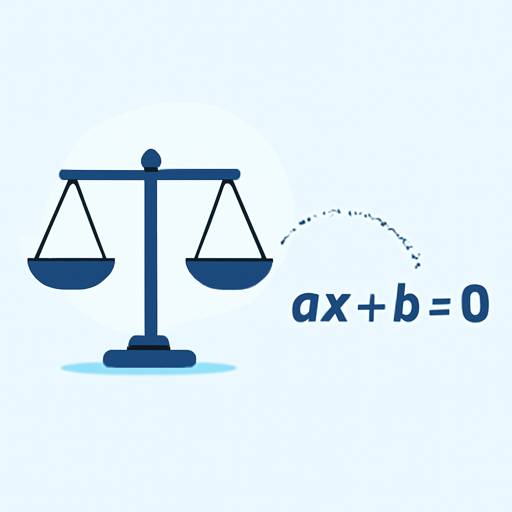
At its core, solving a linear equation means finding the value of x that keeps the scale perfectly balanced. The fundamental principle is this: whatever is done to one side must be done to the other. This is where tools like the properties of equality come in. You can add, subtract, multiply, or divide both sides by the same nonzero number without breaking the truth of the equation. These inverse operations let you “undo” what’s attached to x so that the variable can stand alone.
Linear equations come in many flavors, but they share a common structure. Consider ax + b = c, where a, b, and c are numbers. To isolate x, subtract b from both sides, then divide by a. In multi-step cases—say 3(x − 2) + 4 = 2x + 10—you first simplify: distribute to remove parentheses, combine like terms on each side, and then move terms strategically to isolate x. The process is guided by logic, not memorization: simplify, isolate, and check.
This skill matters because it converts real questions into solvable forms. How many hours at a certain wage cover a bill? What quantity fits a budget after a discount and tax? How many miles are left in a fuel tank given average consumption? Each becomes a linear model, and each is resolved by the same steady approach. Once the method is reliable, the algebra supports confident, fast decision-making in school, work, and everyday life.
Step-by-Step Methods: From Messy Expressions to a Clean Solution
Solving any linear equation can follow a repeatable roadmap. Step one is simplify each side. Distribute to remove parentheses and combine like terms. For example, 3(x − 2) + 4 = 2x + 10 becomes 3x − 6 + 4 = 2x + 10, then 3x − 2 = 2x + 10. Step two is collect the variable terms on one side and constants on the other. Subtract 2x from both sides to get x − 2 = 10. Step three is isolate the variable using inverse operations: add 2 to both sides and get x = 12. Step four is check by substitution: replacing x with 12 in the original equation yields equality, confirming the solution.
Fractions and decimals are not obstacles; they simply call for deliberate moves. When fractions appear, a powerful technique is to clear denominators. Multiply both sides by the least common denominator (LCD) to avoid fraction arithmetic errors. For instance, with x/3 − 1/2 = 5/6, the LCD is 6. Multiply both sides by 6 to get 2x − 3 = 5, then 2x = 8, and x = 4. With decimals, consider scaling by 10, 100, or 1000 to convert them into whole numbers before proceeding. The goal is always to simplify before isolating x.
Some equations have special outcomes. If all variable terms cancel and a true statement remains (such as 0 = 0), the equation has infinitely many solutions—every x works because both sides were equivalent from the start. If the variables cancel and a false statement appears (like 5 = −2), the equation has no solution—no number can satisfy both sides simultaneously. Recognizing these outcomes quickly saves time and clarifies what the algebra is telling you about the situation.
A reliable habit is to narrate each move mentally: “subtract 7 on both sides,” “divide both sides by −3,” “distribute first, then combine.” This reduces sign mistakes, a common source of error. It also helps to maintain structure by aligning equal signs and writing each step on a new line, making it easy to scan your work. Finally, always return to the original equation for a check—especially after working with negatives, distributing through parentheses, or clearing denominators. A correct substitution that balances both sides is the ultimate proof that x is right.
Real-World Scenarios, Word Problems, and Quick Diagnostic Tips
Linear equations are a universal language for everyday trade-offs. Consider a rideshare that charges a base fee plus a per-mile cost. If the base fee is $2 and each mile costs $1.50, then the total cost C for m miles is C = 1.5m + 2. If a rider has a $17 budget, set 1.5m + 2 = 17 and solve for m to plan the maximum distance. Or think of a streaming plan that adds a flat surcharge after a certain number of devices; writing the total cost as an equation in terms of devices clarifies which plan is better at what usage level. Each scenario becomes an x to solve.
Another classic use is in work and rate problems. If a technician completes 1/3 of a job per hour and needs to finish a full job, the time t satisfies (1/3)t = 1, which means t = 3 hours. Compare that to a second technician who works at 1/4 job per hour, and you can analyze combined rates by adding them: t(1/3 + 1/4) = 1, so t(7/12) = 1, and t = 12/7 hours. Though rate problems can look intimidating, they reduce to a simple linear format with a single unknown.
Even small financial choices benefit from an equation mindset. Suppose a shop offers a 15% discount on a jacket, plus a sales tax afterward. If the ticket price is P and the final price is known, setting x as the ticket price or the final price and expressing the discount and tax explicitly allows clean solving with inverse operations. Similarly, budgeting a subscription (constant cost) plus metered usage (variable cost) fits the same pattern and supports smart, data-driven buying decisions.
When accuracy matters, a quick diagnostic checklist helps: first, verify that distribution across parentheses included negatives correctly; a missing negative sign is the most common error. Second, check that like terms were combined only with like terms; mixing x with x^2 or constants is not allowed. Third, if you cleared denominators, make sure the multiplier hit every term on both sides. Fourth, confirm that you moved variable terms to one side consistently and constants to the other. Finally, substitute the found x back into the original equation. A successful check is the easiest way to catch a subtle mistake before turning in work or making a real-world decision.
Graphing can provide an intuitive cross-check. Rewrite the equation so that each side becomes a separate function of x, such as y1 = left side and y2 = right side; the x-value where the two graphs intersect solves the equation. While this is conceptually linked to lines in the coordinate plane, the benefit here is practical: visual confirmation that both sides align at the computed x. For additional structured practice and interactive walkthroughs, explore solving liner equations to strengthen step-by-step fluency with immediate feedback.
Efficiency improves with pattern recognition. Spotting a two-step form like ax + b = c invites a predictable play: subtract b, then divide by a. Recognizing proportional forms—such as kx = m—suggests solving in a single division. Seeing a symmetric structure, such as 2(x + 5) = 4(x + 1), prompts either distribution or dividing both sides by 2 to simplify immediately. Over time, these patterns make inverse operations feel natural, so multi-step problems resolve quickly and accurately without guesswork.

Lahore architect now digitizing heritage in Lisbon. Tahira writes on 3-D-printed housing, Fado music history, and cognitive ergonomics for home offices. She sketches blueprints on café napkins and bakes saffron custard tarts for neighbors.